
Across Canada, an increasing number of individuals are exploring opportunities to maximize their savings while earning competitive interest rates. The Canadian high-interest savings account market presents numerous options that allow people to securely store their money while generating returns. Through careful comparison and informed decision-making, savers can optimize their financial strategies effectively.
Understanding High-Interest Savings: Maximizing Your Financial Potential
Canadian savers are increasingly recognizing the importance of actively managing their savings to achieve better returns. While some individuals keep their funds in accounts earning minimal or no interest, informed savers strategically utilize products offering competitive rates. Research indicates that approximately 62% of Canadians who successfully optimize their finances actively use high-interest savings products, compared to roughly 28% who prefer traditional chequing accounts.
Key Factors for Successful Savings Management
Successful Canadian savers demonstrate a methodical approach to managing their finances. They regularly stay informed about current market conditions, compare various offerings, and make deliberate choices based on their personal needs and objectives. This proactive mindset enables them to capitalize on attractive interest rates available in the market.
Success Factors:
1. Regular Comparison: Successful savers consistently review different savings products to identify competitive interest rates that meet their needs.
2. Strategic Allocation: Rather than leaving funds in accounts with minimal interest, they actively transfer money to products offering superior returns.
3. Understanding CDIC Protection: Knowledge of the $100,000 CDIC protection limit helps them distribute savings across multiple institutions when necessary.
Current Market Conditions and Opportunities
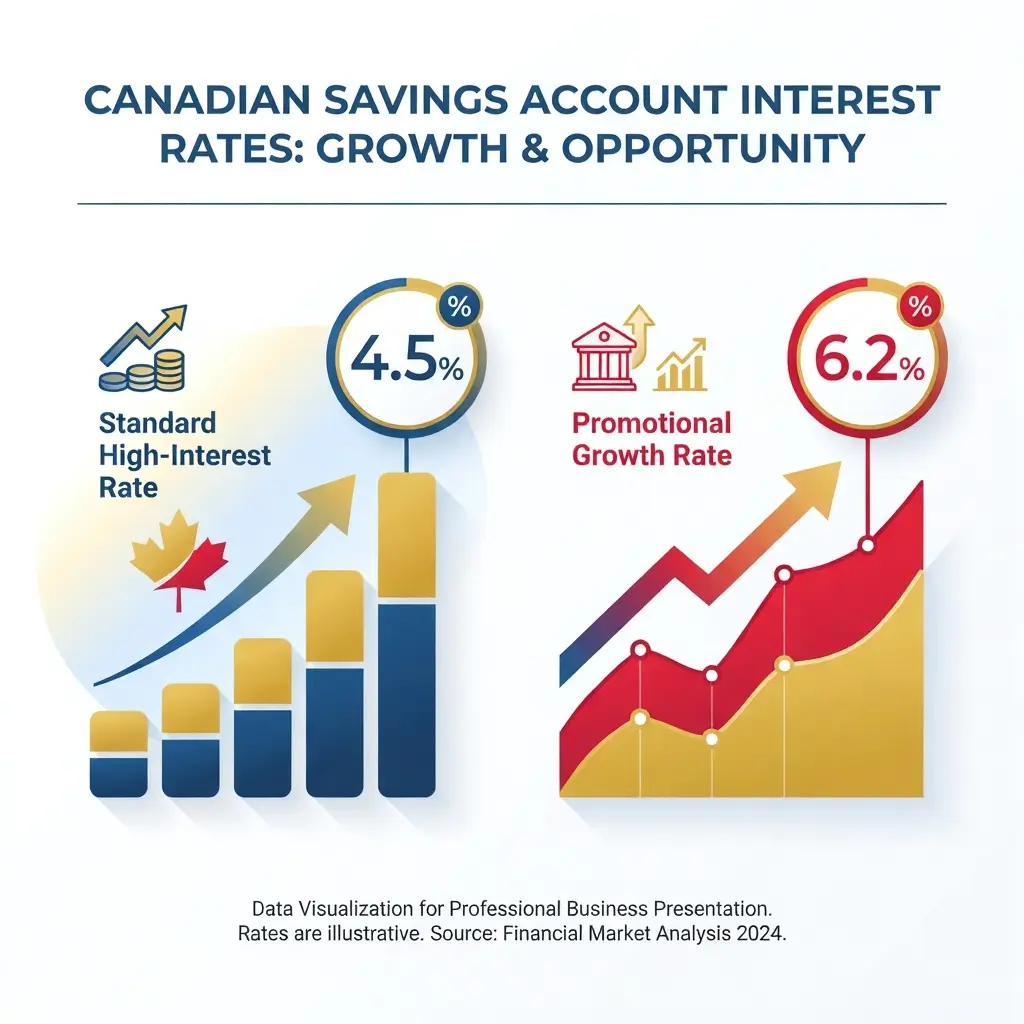
The Canadian high-interest savings market currently presents attractive conditions for individuals seeking to earn interest on their deposits. Following a period of historically low rates, banks and financial institutions are now offering more competitive returns. Some flexible high-interest savings accounts currently offer up to 4.5% interest, while one-year GICs can provide approximately 6.2% interest. These rates reflect current economic conditions and may adjust as circumstances evolve.
Personal Account: Sarah M. from Toronto, Ontario

"Two years ago, I had saved $35,000 that was earning almost no interest in my regular chequing account. A friend suggested I just leave it there, but that didn't make sense to me, so I started researching alternatives."
"I spent time comparing different savings products online and discovered several accounts offering 4.0% to 4.5% interest – significantly better than what my regular account was paying. I distributed my money across four different banks to ensure I was fully covered by CDIC protection."
"Today, two years later, through making informed decisions about where to keep my savings, that money has grown. The key was taking the time to understand my options and then acting on that knowledge."
Note: This is an individual experience and does not guarantee similar results. Results vary based on individual circumstances, interest rates, and market conditions. Past performance does not guarantee future results.
Understanding High-Interest Savings Accounts: Features and Benefits
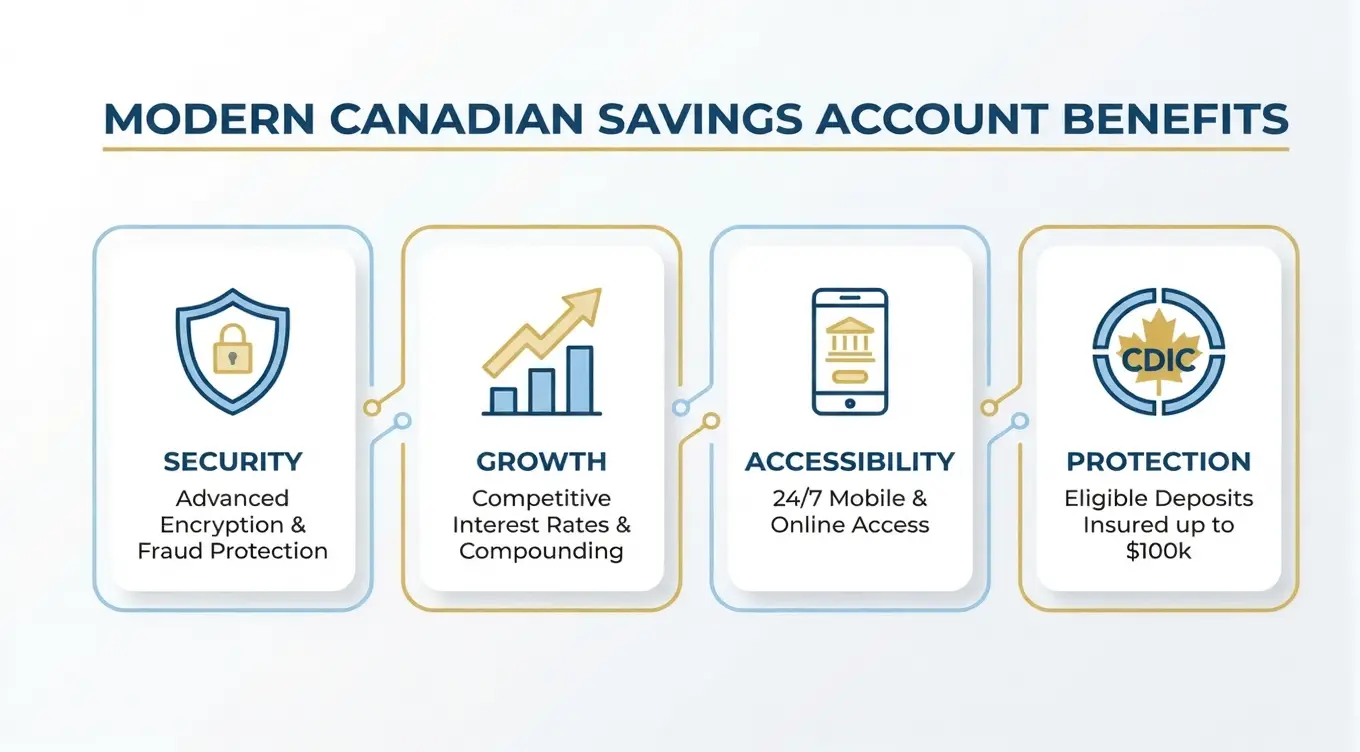
Canadian high-interest savings accounts provide a secure way to store money while earning competitive returns. There are several main types available:
- High-Interest Savings Accounts: Your funds remain accessible whenever needed while continuing to earn interest. Current competitive rates may approach around 4.5%.
- Guaranteed Investment Certificates (GICs): These typically offer higher interest rates in exchange for committing funds for a specified term (typically 30 days to 5 years), with current competitive rates around 6.2% for one-year terms
- CDIC Protection: Your savings are protected up to $100,000 per person per financial institution through the Canada Deposit Insurance Corporation
- Typically No Fees: Most high-interest savings accounts today don't include monthly fees or account maintenance costs
- Digital Management: You can usually open and manage accounts entirely online from anywhere in Canada
Finding the Most Competitive Rates
Canada's savings market is extensive, with over 150 banks and financial institutions offering different products. Comparison tools can significantly simplify the process of finding options that work for your situation.
Quality comparison services typically offer:
- Frequently refreshed rate data from multiple providers
- Clear presentation of all applicable terms and conditions
- Methods to filter by term length, minimum deposit, and withdrawal requirements
- Displaying only options with complete CDIC protection
- Immediate links to apply online when accessible
💡 Expert Perspective:
If you have larger amounts to save, consider dividing them across several different banks to fully utilize the $100,000 CDIC protection limit per institution. This strategy enables you to save larger sums while keeping everything fully protected.

Compare Savings Account Rates
Browse options from more than 150 Canadian banks and financial institutions to find savings rates that match your requirements. The comparison service is free, without obligation, and takes only a few minutes.
Compare Savings Rates →✓ Competitive interest rates on high-interest savings accounts (rates vary)
✓ CDIC protection up to $100,000
✓ Free and non-binding comparison
⚠️ Important Information About This Advertising Content:
This is a paid advertisement. The information provided here is for general information purposes only and does not constitute financial advice. All details regarding interest rates and terms are provided without guarantee and may change without notice.
Risk Information: Even with CDIC protection, it is important to research thoroughly before making financial decisions. Past performance does not guarantee future results. Please be aware that interest earnings are subject to Canadian taxation.
No Guarantees: We do not guarantee any returns, earnings, or financial outcomes. This is an informational advertisement only. Results vary between individuals, and there is no assurance that similar results can be achieved. We make no promises regarding financial outcomes.
Not Financial Advice: This content does not constitute financial, investment, or legal advice. We are not authorized or regulated by the Financial Consumer Agency of Canada (FCAC) or provincial securities regulators and do not provide regulated financial services. Always seek advice from an independent financial adviser or contact financial institutions directly before making decisions.
Interest Rate Information: All interest rates mentioned are illustrative examples and may not be available to all applicants. Rates are subject to change and may vary based on individual circumstances. Always verify current rates directly with providers.
Common Questions and Answers
How secure are savings accounts in Canada?
Canadian savings accounts receive protection from the Canada Deposit Insurance Corporation (CDIC) for amounts up to $100,000 per person per financial institution. Certain providers may offer supplementary protection arrangements for amounts exceeding this threshold.
Can non-Canadian residents open savings accounts?
Yes, individuals with valid Canadian residency status can typically open savings accounts. You will generally need to provide valid identification documents and have a Canadian residential address.
What is the typical timeframe for accessing my funds when needed?
High-interest savings accounts provide immediate access to your funds whenever required. GIC products require you to maintain your funds for the agreed term, but they typically offer more competitive interest rates in return for this commitment.
Are interest earnings subject to taxation?
Interest income is taxable under Canadian tax law. Depending on your individual situation, you may qualify for various tax credits and deductions. We suggest consulting with a qualified tax professional for personalized tax advice.